Regions Of The Vale
Midvale
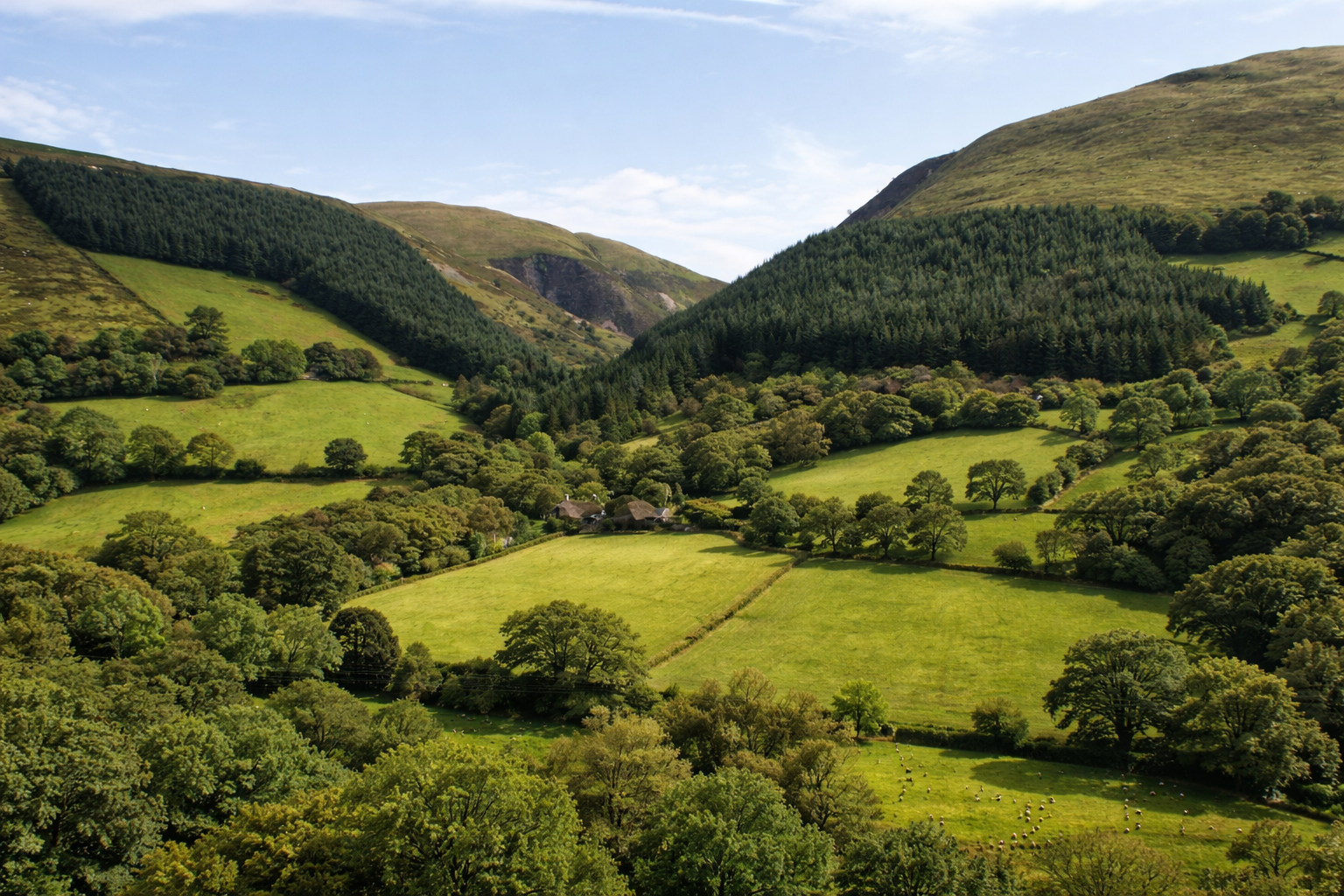
Midvale occupies the worked centre of the Vale of Fingers. It is not distinguished by dramatic terrain or singular landmarks, but by continuity of use. The land here has been settled, divided, recorded, and returned to again and again, until its present form reflects centuries of sustained labour rather than any one founding act.
The landscape is predominantly agricultural. Broad fields follow the natural rise and fall of the land, divided by hedgerows, low walls, drainage cuts, and lanes compacted by repeated travel. Cropland lies close to villages; pasture extends outward, interspersed with managed woodland and common ground. Areas left uncultivated are rarely unmanaged. Coppiced groves, fallow fields, and grazing rights mark land set aside temporarily rather than abandoned. Wilderness, where it exists at all, is short-lived.
Settlement density is high, though large population centres are rare. Midvale is structured around villages, hamlets, and small market towns, each tied closely to the land that sustains it. Most people live within walking distance of their fields or trades. Settlements tend to form at practical points of convergence: bridges, mills, crossroads, shrines, and storehouses. Travel through Midvale passes through frequent signs of habitation, even when no single place asserts regional dominance.
Crownhold, on the southern shore of Hallowglass Lake, stands apart from this pattern. Its scale and function exceed those of the surrounding countryside, drawing administrators, scholars, pilgrims, and long-distance traders. Even so, its authority diffuses quickly beyond its roads and records. In Midvale itself, governance is exercised through routine rather than spectacle. Reeves, assessors, scribes, and saintly magistrates move on established circuits, maintaining obligations and resolving disputes without permanent presence.
Life in Midvale follows a predictable rhythm shaped by season, labour, and observance. Planting and harvest define the year as firmly as any calendar. Market days, saints’ festivals, and local holy days provide regular interruption rather than exception. Faith is present throughout daily life, expressed through small temples, roadside shrines, and repeated ritual. The gods and Saints are treated as reliable participants in the world rather than distant authorities, acknowledged in thanks, petition, and record.
Midvale’s significance lies in its function. It produces food, labour, revenue, and continuity. It sustains Crownhold and stabilises the wider Vale through record-keeping, boundary maintenance, and the preservation of custom. When larger structures endure, they do so because Midvale continues to operate without requiring reinvention.
It is not a region that draws attention to itself. Its importance is cumulative, and its absence would be immediately felt.
Crownhold
Crownhold is the capital of the Vale of Fingers and the only true city in the world, standing on the southern shore of Hallowglass Lake, where the lake-roads, the highways, and the farmland of Midvale all come together.
Its heart is far older than its rule. The central districts were raised in the Age of Song, before the breaking, and they look like nothing built since: pale and organic, grown rather than cut, like bone coaxed into arch and vault. That old quarter stands high on a hill that falls to a cliff above the lake, and its stone is said to hum faintly to those who listen, threadlight caught in the walls and never let go. From there the Concordate rules, the old crown sealed away beside them, kept not as a treasure but as a reminder of the kings they unmade.
The city long ago outgrew that centre, and its more recent wall with it. Three great roads run out from Crownhold, and along each the city has spilled past its defences in market, workshop, and home, until the sprawl beyond the walls dwarfs the walls themselves. Into it the whole world has poured: every people of the Vale lives here shoulder to shoulder, drawn by the courts, the archives, the great temples, and the work that only a capital can offer. Daily life turns less on blood than on trade and civic role.
Beneath the high old town, the dwarven quarter is cut into the cliff and runs down to the docks, where the lake-trade lands and the law wears thin. Above everything, set into the Age-of-Song stone, a viewing platform looks back across the whole reach of the city. Crownhold keeps many marketplaces and one very great one; the Great Library, which needs no other name; and taverns at every station of life, from the lawless Foaming Head on the dockside to the Settled Stone, where the comfortable keep their rooms among the humming halls.
Northvale
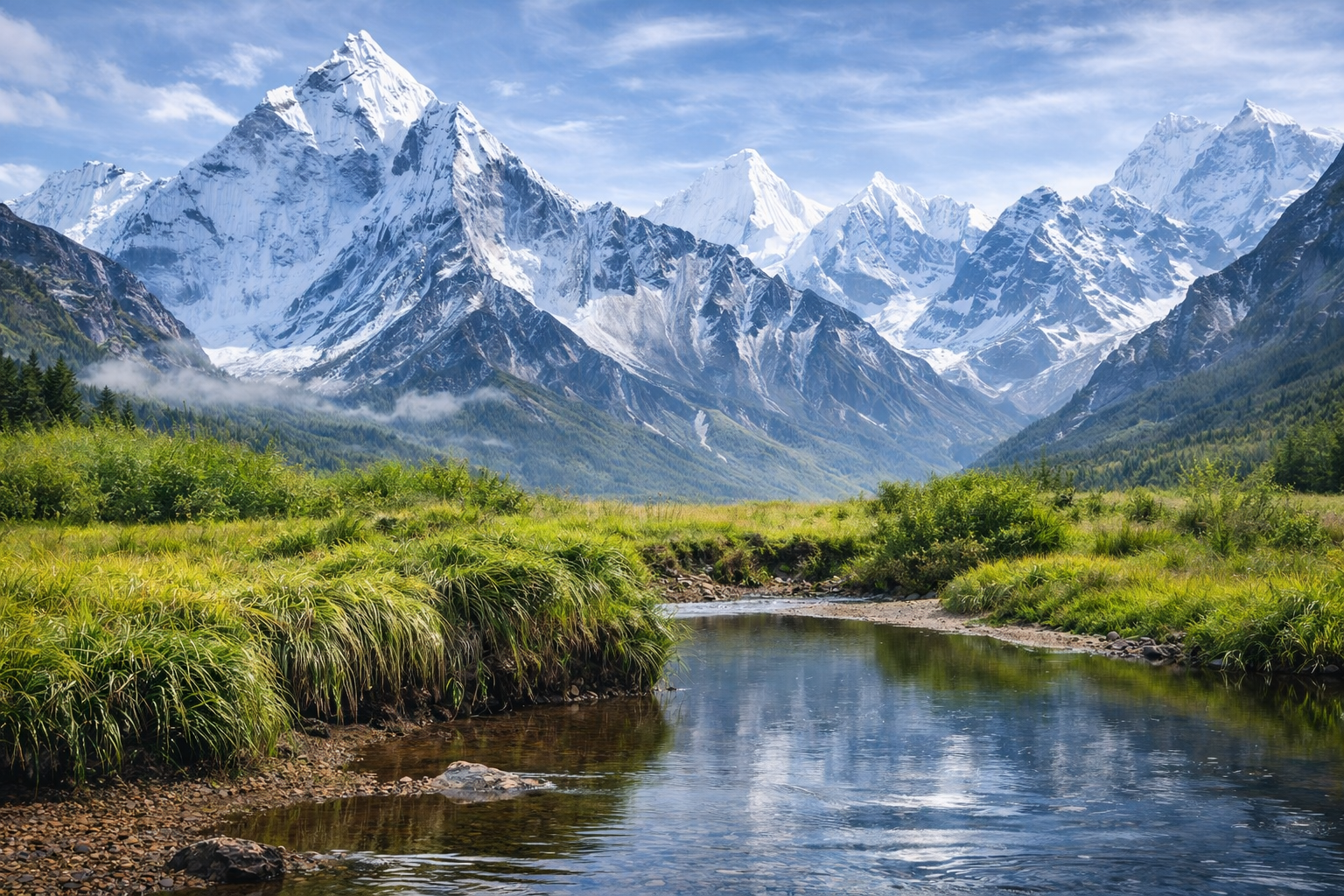
Northvale occupies the northern edge of the Vale of Fingers, where the land rises toward the mountains known as the Fingers and the climate grows colder and less predictable. The peaks are visible across much of the region, shaping weather, water, and the limits of cultivation. Long winters and short growing seasons impose practical constraints that define settlement and movement.
The region is marked by steep valleys, cold rivers, and dense forest. Snow closes routes for much of the year, and roads are few, uneven, and often older than Crownhold’s authority. Many are maintained by local custom rather than central oversight, and travel depends on seasonal knowledge as much as distance. Communities in the lower valleys maintain regular contact and trade with the rest of the Vale, but farther north, isolation increases and outside administration becomes intermittent rather than continuous.
Northvale’s culture reflects these conditions. Communities place high value on self-sufficiency, mutual obligation, and memory of past hardship. Longhouses, communal storehouses, and shared hearths remain common. Oaths are taken seriously and remembered, hospitality is formal and conditional, and local saints associated with endurance, winter, and protection are more prominent than those favoured in the south. Authority is often vested in elders, war-leaders, or respected household heads rather than appointed officials.
Ruins are common across Northvale, embedded in forest and stone. Some date to the Age of Song, others to the period surrounding the Sundering, when habitation in the high valleys sharply declined. Certain sites are avoided and left unnamed, while others have been incorporated into settlements, their original purpose largely forgotten.
To the rest of the Vale, Northvale is a boundary region. It is not lawless, but it is shaped by distance, terrain, and older ways of living. Those who dwell closest to the mountains are often regarded with caution, seen as harder to read and less governed by southern custom. Whether this suspicion is warranted is a matter of perspective, but it endures all the same.
Caelond
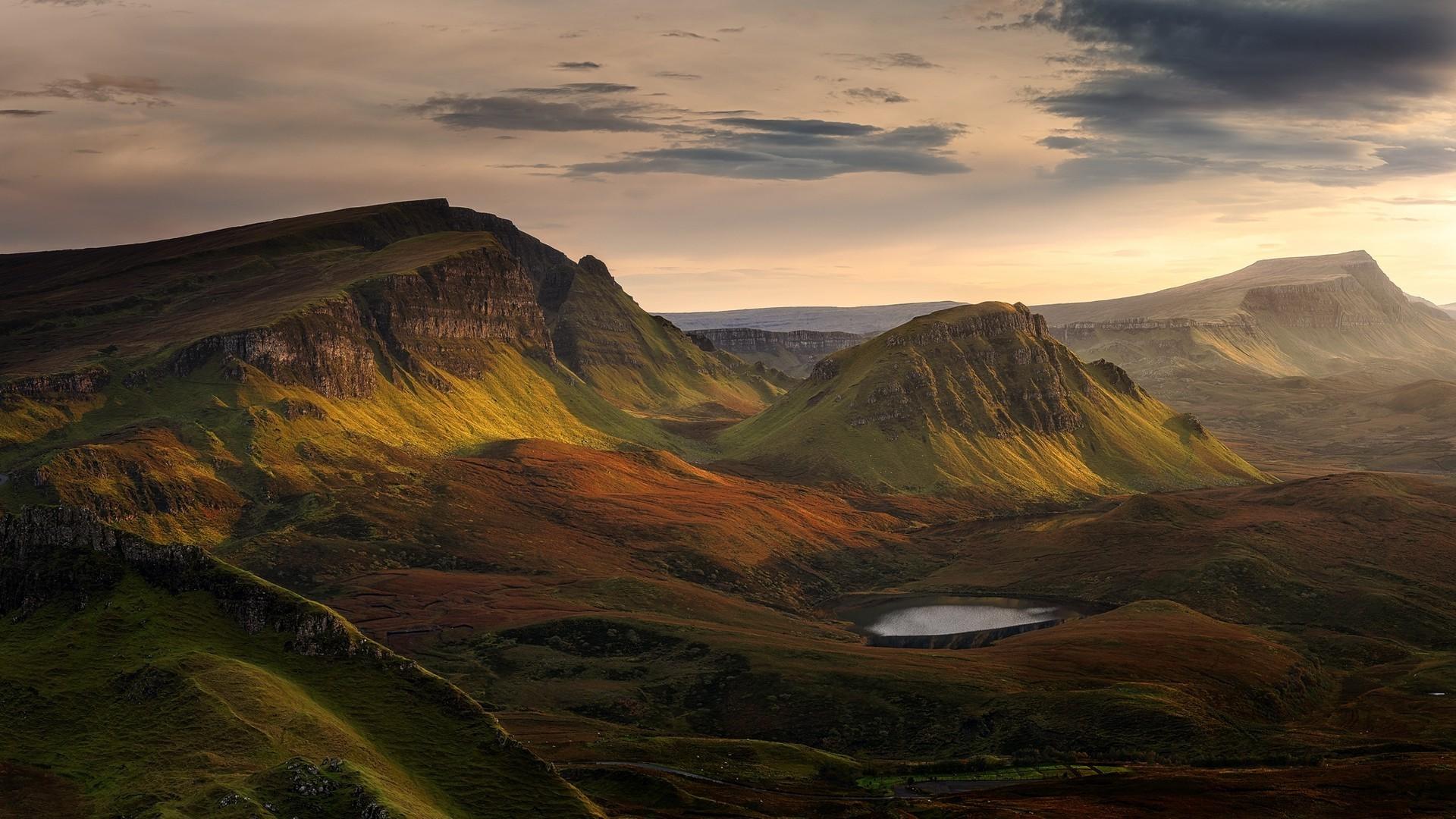
Caelond lies along the western edge of the Vale of Fingers, where settled land meets the Everfall Sea. The region is defined by exposure: to wind, rain, and the steady movement of weather systems rolling in from the ocean. Skies are often low and unsettled, and conditions can change rapidly, shaping both land use and daily routine.
The landscape consists of rocky hills, open grassland, moor, and broken coastline. Soil is thinner than in Midvale, and agriculture is correspondingly limited. Grazing is more common than crop farming, and fields are fewer and smaller. Boundaries are marked with stone walls and low fences rather than hedgerows, and settlements are positioned for shelter from prevailing winds rather than proximity to fertile ground.
Rain is frequent and expected. Rivers remain full year-round, and mists gather along the coast and higher ground. Woodland is sparse and fragmented, giving way quickly to open slopes and exposed terrain. The land supports life reliably, but not generously, and patterns of habitation reflect that constraint.
Caelond contains several of the Vale’s major ports, making it the primary point of contact between the inland regions and the Everfall Sea. Coastal towns are organised around harbours, shipyards, warehouses, and trade halls. Sailors, merchants, and pilgrims pass through regularly, and accounts from distant shores tend to arrive here first, though they are often treated cautiously given the sea’s reputation for loss and exaggeration.
Cultural life in Caelond reflects both age and openness. Communal halls, shared meals, and public gatherings remain central, shaped by a need to concentrate people and resources where shelter allows. Song, oral history, and seasonal festivals carry social memory more reliably than written record. Saints associated with travel, endurance, and return are widely honoured, alongside older coastal markers such as standing stones, shrines, and traditional meeting sites that predate current administration.
Within the wider Vale, Caelond is often spoken of as a land of rain, stone, and sea-worn people. Those from inland regions tend to see its communities as tightly bound and self-reliant, shaped by weather and loss at sea. From this perspective, Crownhold’s presence is thought to matter little in daily life, except where ships are counted, cargo assessed, and tariffs levied on what the sea brings in or takes away.
Eastryn
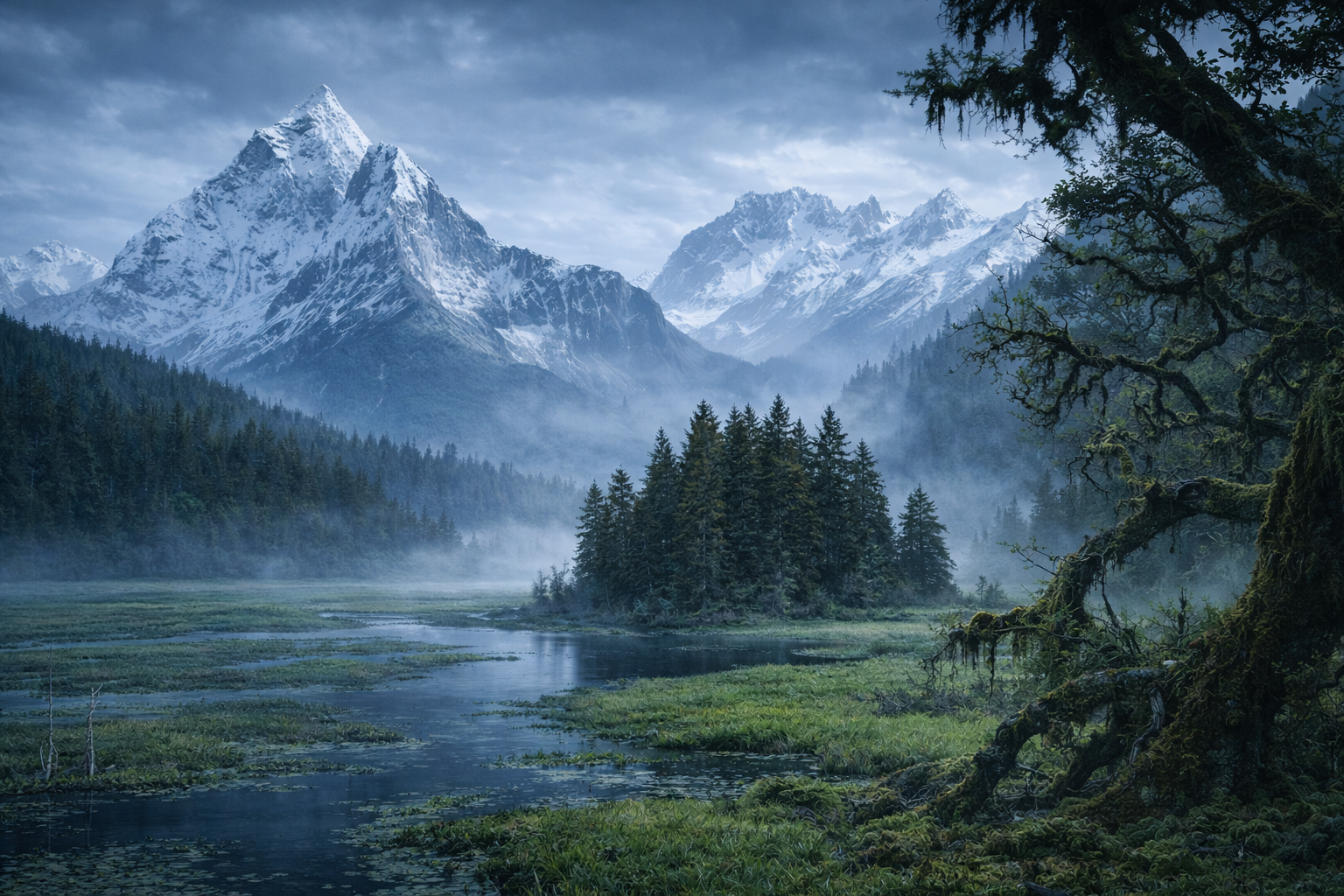
Eastryn occupies the eastern reaches of the Vale of Fingers, where lowland rivers and wetlands give way to extensive forest. The region is defined by water and growth: slow-moving waterways, saturated soil, and dense vegetation that thickens steadily with distance from settled ground. Rain is frequent, usually light but persistent, and humidity shapes both agriculture and architecture.
Much of western Eastryn consists of fertile river land. Fishing, foraging, and careful cultivation support stable settlements, which tend to cluster along waterways or raised ground. Movement follows rivers more often than roads, and boats, causeways, and narrow paths provide the primary links between communities. Life here is productive and abundant, though dependent on constant maintenance against flood and overgrowth.
Farther east, forest becomes the dominant feature. The canopy closes, undergrowth thickens, and visibility shortens. Moss, fern, and waterlogged soil soften sound and distort distance, and paths require continual clearing to remain passable. Orientation in these forests depends heavily on local knowledge. Those unfamiliar with the land often describe a sense of dislocation, though whether this arises from terrain, climate, or expectation is difficult to separate.
Beyond the deepest forests rises Mount Tirhallow, a solitary peak visible from great distance. The land surrounding it is widely regarded as older and less tractable than the rest of Eastryn. Communities nearer the mountain tend to be smaller and more inwardly focused, with customs that differ subtly from those of the Vale’s centre. Outsiders often describe these people as difficult to read: neither hostile nor welcoming in expected ways, attentive to boundaries that are not always explained.
Eastryn’s remoter communities do not exclude outsiders outright. Visitors are often welcomed and assisted, but unfamiliar customs, indirect guidance, and reliance on local knowledge can quickly complicate travel. Changes in weather, growth, and expectation are rarely announced, and travellers may realise only belatedly that they have lost their intended path. Time is a common point of confusion in local accounts: travellers who intended brief stays remaining far longer than planned, or leaving without clear recollection of how decisions were made. Such stories are common enough to be treated as caution, though not universally believed.
Within the wider Vale, Eastryn is associated with both abundance and unease. It is a land where growth is constant and visible, and where danger rarely announces itself. Those who expect it to behave consistently often discover the change only after it has already taken hold.
The Vaelmark

The Vaelmark forms the southern edge of the Vale of Fingers, where settled land gives way to the Ashlands. It is the region most visibly shaped by past war. Conflict here is not confined to record or memory; it is evident in altered terrain, disrupted settlement, and patterns of abandonment that have never fully reversed.
Toward the southern border, the soil darkens to iron-rich red, and in many places remains disturbed. Bones and fragments of equipment still surface after heavy rain or drought, remnants of battles fought across generations rather than a single campaign. Irrigation networks were broken, forests were cleared or burned, and large areas of farmland were rendered unusable. Much of this land was never restored, either because the cost was too high or because conditions remained unstable.
The climate of the Vaelmark is warm and dry, with long summers and steady winds. Before the wars, this supported a dense population and a reputation for learning and trade, as the region once served as a southern approach to the wider world. That role collapsed with the loss of surrounding lands. What remains of this earlier period survives only in partial form: ruined halls, truncated roads, and foundations that no longer connect to anything beyond the Vale.
Current settlement is sparse and uneven. The largest communities have formed around the remaining garrisons and defensive works, particularly where passes or open ground lead directly toward the Ashlands. These sites remain maintained out of caution and habit, even when the original threat is poorly defined. Around them have grown small towns of soldiers’ families, traders, labourers, and those displaced from elsewhere in the Vale. Their economies are limited, and daily life is organised around watch rotations, supply storage, and the maintenance of old defences, leaving little space for growth beyond what is necessary to endure.
Beyond these fortified centres, habitation is rare. Villages are widely spaced, and many former settlements stand abandoned, slowly eroded by dust and scrub. Agriculture persists only where water and soil permit it, and even then on a restricted scale. The land supports life, but without surplus.
Within the wider Vale, the Vaelmark occupies an uneasy position. Its settlements are vital to maintaining the southern border, yet they are often overlooked, as attention to the region brings with it an implicit reckoning with past conflict and the suffering that followed. For many elsewhere in the Vale, distance from the southern border allows daily life to proceed without confronting that history. In the Vaelmark, that distance does not exist.